

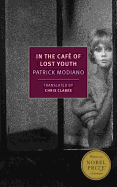
Patrick Modiano's novels trade on nostalgia: for lost love, time or ephemeral sensation. Characters like the ones in In the Café of Lost Youth are constantly thinking about their pasts, ignoring their present selves as they search for some doorway (if only through a memory) to a time that was. If there's anything that marks the Nobel Prize-winner's work, it's that yearning for what has been.
In the Café of Lost Youth revolves around Louki, a young woman in 1950s Paris, and examines her from four perspectives as she moves through the lives of the men around her. The narrators are an acquaintance, an investigator hired by her husband to find her, an old flame and Louki herself. A sort of walking ellipsis, Louki has motives that are never really clear, even to herself, and the novel doesn't move along a plot line so much as explore the various ways she is seen. Modiano may want to give a full account of this woman, or instead give the reader the same impression the various narrators have of her: that of a ghost passing through a room.
As is typical with Modiano, even with Louki's interior monologue, the reader feels removed. And although Louki is an unknowable presence in the story, In the Café of Lost Youth expertly re-creates its Paris milieu. From small descriptions of the bars and bookstores the characters frequent to the casual mention of neighborhoods now radically different after gentrification, the novel elicits nostalgia from the reader, even if he or she never visited Paris in the mid-20th century. --Noah Cruickshank, marketing manager, Open Books, Chicago, Ill.