

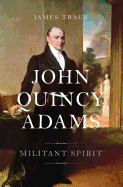
As a student attending Harvard College, John Quincy Adams worried his generation was doomed to mediocrity. His father's generation had cast off the yoke of British rule and founded a new nation. John Quincy saw in himself and his peers a worrisome complacency, even immorality, and a lack of some great cause to strive toward. These concerns came from a young man who had already traveled throughout Europe and Russia and was fluent in multiple languages. This deep-set need to achieve, fostered by the overbearing parenting of John and Abigail Adams, drove John Quincy for the rest of his life. So, too, did another inheritance--an ironclad moral sense. John Quincy's ambition and inflexible standards made him president but, like his father, for only one term. His conscience made him a poor political player, yet it also made him a moral beacon. During his time in the House of Representatives after his presidency (the only ex-president to ever make such a move), John Quincy became the congressional voice for a movement gaining ground during his elder years: the abolition of slavery.
John Quincy Adams: Militant Spirit by James Traub (The Devil's Playground) is a sharp portrait of the fascinating statesman who helped bring about the consolidation of the United States from fragile upstart into emerging major power. Traub's plentiful source material--Adams kept a journal throughout most of his life--reveals a complex man: a Puritan patrician, a genius diplomat, a villain to many and hero to a hopeful few, including the Amistad defendants. John Quincy Adams is a magnificent work. --Tobias Mutter, freelance reviewer