

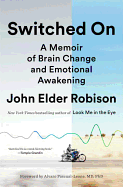
In Look Me in the Eye, John Elder Robison wrote about his adult diagnosis of Asperger syndrome. In Switched On, Robison details his participation in a research project at Beth Israel Hospital that used transcranial magnetic stimulation (TMS) to ignite certain key areas of his brain that focus on the ability to read people's emotions through their facial and body gestures. The inability to connect emotionally is a common trait in people with Asperger's; they are often seen as detached because they miss the nonverbal signals people send out on a constant basis. TMS works on the premise that when it "adds electromagnetic energy to the neural networks inside your head, it helps them build new connections, and it reinforces the connections we [the doctors] want to strengthen." But because this was a research project, the subjects and the doctors didn't quite know what to expect once the stimulations had been performed.
Robison shares with readers his excitement at the possibilities, his fears of any possible changes and the actual, sudden leaps in understanding and perceptions that transpired after each experimental session. These personal moments are intertwined with discussions on the TMS process, Robison's former work with electronic circuitry and the way his family and friends reacted to the changes he experienced over time. Though a bit wordy, Robison's experiences with TMS and Asperger syndrome provide a great view of new research into the fascinating world of the human brain. --Lee E. Cart, freelance writer and book reviewer