

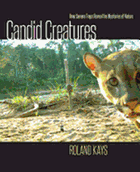
In Candid Creatures, Roland Kay, head of the Biodiversity and Earth Observation Laboratory at the North Carolina Museum of Natural Sciences, collects images from automated camera traps that help us understand and decode animal behavior and habitats. Kay collaborated with 153 research groups to feature the 613 photographs in this remarkable collection. Candid Creatures is distinctive in the astonishing quality of its photographs depicting a diverse cast of animals, from tigers to the less well-known servaline genet, a small-prey hunter in African forests.
Camera traps have enabled the scientific community to research and estimate animal numbers and habitats and identify habits and behavior patterns they would otherwise be unable to witness in person. Ideal for observation, the technology is relatively noninvasive, though as is evidenced by many of the photographs, some animals do take notice. Animal and habitat conservation efforts receive much-needed support thanks to the increased visibility and concrete evidence of the plights these animals and areas face--though Kay is quick to note that scientists are not the only people using this form of photography. Camera traps are widely used by hunters and have become increasingly popular with hobby naturalists and animal lovers. People without the ability to set their own traps can access live Internet feeds and apps to discover nature without threatening or disturbing habitats. Kay's writing and research show how such photos expose a complicated ecosystem people are just starting to discover. --Justus Joseph, bookseller at Elliott Bay Book Company