

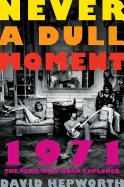
The best tagline to British music journalist David Hepworth's love letter to rock-n-roll might be from its introduction: "You never get to be twenty-five again." For Hepworth, rock music "never got any better than 1971." He makes a good case for his claim. It was a year when cigarette smoking was ubiquitous, New York City real estate prices were off 50% from two years earlier, and new cars sported 8-track stereos. Vietnam War protest marches sometimes blurred their lines with dope and music festivals. Tower Records on Sunset in Los Angeles was a vinyl mecca. "Rolling Stone was still the black-and-white double-folded underground magazine... yet to become the Life magazine of the denim bourgeoisie." It was also the year the Doors' Jim Morrison died at 27 (the same age as Hendrix and Joplin before him), leading to a Rolling Stone cover proclaiming: "He's hot. He's sexy. He's dead."
From January's Carole King blockbuster Tapestry to December's Don McLean eulogy to rock 'n' roll, American Pie, Hepworth runs through a year of great music as pop gave way to rock, and the 45 rpm single expanded into carefully conceived LPs. Appropriate to their claim to be the "World's Greatest Rock Band," the Rolling Stones dominate the month of May: their move to France to avoid taxes and manage their own finances, the release of Sticky Fingers with its Warhol cover, Jagger and Bianca's wedding, and all those Dominique Tarlé photos of debauchery in Nellcôte during the creation of Exile on Main St. With its apt title, Never a Dull Moment makes you want to be 25 in the '70s again. --Bruce Jacobs, founding partner, Watermark Books & Cafe, Wichita, Kan.