

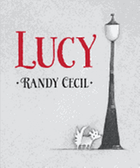
In the first three acts, Randy Cecil (Brontorina) tells a similar story of a little stray dog named Lucy in three different ways, and children will revel in spotting the clever additions and changes, big and small, that shape the narrative.
The first act begins: "As the sun rose over Bloomville,/ a distant trumpet began to play--/ doodle-de-doodle-doo." The notes drift into the dreams of a little white dog, but a car door slams: "She was awake now." She runs past Bertolt's Butcher Shop, "the diner with the questionable scraps," a one-eyed cat and some park pigeons, until she finds her spot... the stoop of a red-doored apartment building. Here she waits for Eleanor Wische, the girl with the toaster-shaped head, to lower a bit of sausage on a string from an upstairs window. Inside, Eleanor's father is juggling his snow-globe collection, so absorbed he's late for work, and almost trips on the little dog on his way out. Small moments are captured in few words and many pictures, like sniffing a neighborhood mailbox (Lucy) or buying a cheese sandwich (Eleanor).
All acts but the fourth end with a nightmare: Eleanor's father paralyzed with stage fright as he tries to juggle on stage at the Palace Theater. In the satisfying denouement, dog, girl and father all find what they seek, be it sausage, love or courage. Cecil's circular duotone illustrations have the pleasingly odd, architectural starkness of Edward Gorey's compositions, but with the soft texture of sandstone. Lucy is a sweet stray dog story and an extraordinary exploration of persistence and perspective. --Karin Snelson, children's & YA editor, Shelf Awareness