

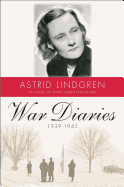
Astrid Lindgren's War Diaries, 1939-1945, is a fascinating account of life in neutral Sweden during World War II.
Famous today as the creator of Pippi Longstocking, which was published in 1945, Lindgren was a 30-something housewife and aspiring author during the war years. Her diaries are a mix of the personal and political. Marital problems, concerns about her son's difficulties at school and rumors about increased rationing are mingled with her determination to document the course of the war. Lindgren includes clippings from newspapers and information gained on her night job with a security agency responsible for censoring correspondence sent to or from other countries. Although her work was so hush-hush that her children did not know what she did, she had no hesitation about copying and commenting on sections of the letters in her diaries, including letters describing the transportation of Jews to concentration camps in Poland as early as 1941.
Readers hoping to gain insight into the creative process behind what Lindgren describes as "that jolly funny book" will be disappointed. There are few references to her writing. Instead, she describes her relief and guilt over Sweden's relative prosperity, her shame over allowing German troops to travel through Sweden and her fear that the Soviet Union might prove to be a greater threat than Germany.
Lindgren's War Diaries tell the story of the war as seen through the veil of Swedish neutrality--a veil that Lindgren recognized was perilously thin. --Pamela Toler, blogging at History in the Margins