

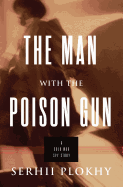
The Cold War era was marked by paranoia, propaganda and the simmering threat of nuclear war. Tensions between the West (the United States and NATO allies) and the East (the Soviet Union and its satellite states) led to heightened espionage on both sides. Thus, in 1961, when top KGB assassin Bogdan Stashinsky defected to the West and began to spill the secrets of his trade, the intelligence community on both sides was thrown into turmoil. "I wanted to unburden my conscience and give... publicity to the way in which 'peaceful coexistence' really works in practice."
The Man with the Poison Gun: A Cold War Spy Story reveals Stashinsky's complex life. His family was part of the Ukrainian independence movement during and after World War II, and yet he began working as an undercover KGB agent in his early 20s. He showed distinct aptitude, and in 1959 was ordered to assassinate Stepan Bandera, charismatic leader of the Ukrainian resistance. Stashinsky successfully carried this out using a makeshift spray gun that fired poison gas, but he never held strong political passions and shortly thereafter became disenchanted with his secret life.
Serhii Plokhy, professor of Ukrainian history at Harvard University, has earned numerous awards, including the 2015 Lionel Gelber prize for The Last Empire. His solid reporting and intelligent analysis illuminates this tangled web of intrigue. He lays out historical events and complex twists and turns with clarity. Those who enjoyed Ben Macintyre's A Spy Among Friends will find this a fascinating history. --Cindy Pauldine, bookseller, the river's end bookstore