

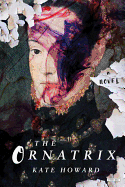
Born with a birthmark the shape of a bird across her face, Flavia's life has been one of hiding and shame--first tucked away in her family home, then hidden behind a veil and, finally, sent to board as a servant in the convent of Santa Giuliana. There, she meets Ghostanza, a Venetian courtesan exiled by her family to live with the nuns. Obsessed with her appearance, Ghostanza spends her days scheming ways to collect the materials needed for her secret beauty treatments, including her closely guarded recipe for the perfect cerussa, a blended white lead used as a skin lightener.
"If a woman is not seen, she does not exist," she tells Flavia, who has been selected to serve as Ghostanza's ornatrix (a servant responsible for adornments and decorations). These words spark something inside Flavia, who becomes determined to find her own beauty and be seen--no matter the cost.
The antique recipes for beauty treatments slipped between the chapters of The Ornatrix are a testament to Kate Howard's skill in drawing on the truths of history to reflect on beauty and womanhood (and where the two intersect) in 16th-century Umbria and up through today. Howard's language is as layered as the paints Ghostanza spreads across her face each day, which can make the plotting of The Ornatrix feel slow and slippery at times. As a whole, however, and especially as it slinks forward to a surprising conclusion, Howard's debut proves to be a complicated, intricate story of beauty, obsession, revenge and what it means to be seen--and therefore to be known. --Kerry McHugh, blogger at Entomology of a Bookworm