

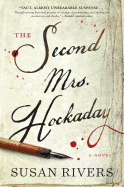
"I do not believe to this day that Placidia Fincher Hockaday murdered her own child and buried it on Holland Creek," a witness says. Based on a true story, this gripping debut novel by Susan River unravels the mystery of what happened to a teenage bride left for two years to manage her husband's South Carolina farm while he fought for the Confederacy. The Second Mrs. Hockaday begins in 1863, but it isn't until her son discovers her journal in 1892 that the truth comes to light.
The first third of the book consists of letters from 1865 between the jailed Placidia and her cousin. These offer rich details about her deep love for widower Gryffth Hockaday and his infant son, her brutal life on the isolated farm--everything except her alleged crime. She even admits to bearing a child during her husband's absence. When Gryffth returns, gossiping neighbors disclose the baby's birth--and death--before he gets home, and when Placidia refuses to explain, he brings charges against her. Placidia is likable, resilient, stoic and fair; Rivers maintains the novel's tension in the book's first half and doesn't reveal Mrs. Hockaday's fate after her arrest. It is, however, reassuring that the second section, set in 1892, is the story of Placidia and Gryffth's children--apparently the truth freed rather than confined her.
In a complex, credible plot twist, Achilles Fincher Hockaday discovers a leather-bound copy of David Copperfield among his late mother's belongings. Faded writing on the back of its illustrations reveals her full story. Achilles, his siblings and characters from Placidia's era now enjoy a peaceful, refined world, and it's a fitting coda to the story of a woman buffeted by wartime horrors. --Cheryl Krocker McKeon, manager, Book Passage, San Francisco