

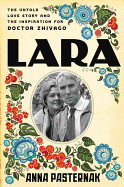
A distant relative and lyrical writer in her own right has now uncovered the real-life muse behind one of the most iconic heroines of the 20th century. Journalist Anna Pasternak plumbs the heart of her great-uncle, famed author Boris Pasternak, in the urgent, poetic and achingly heartbreaking Lara: The Untold Love Story and the Inspiration for Doctor Zhivago.
Pasternak relies on first-hand accounts from relatives, as well as journals, letters, poems and biographies, to piece together the life of Olga Ivinskaya, who became Boris Pasternak's mistress and the inspiration for Lara in Doctor Zhivago. Pasternak plots this personal story to parallel the development of her great-uncle's novel. That Lara reads like a high-minded, emotionally tortured Russian novel shouldn't be surprising. In the period between the Russian Revolution and World War II, the moral stakes for writers in the Soviet Union couldn't have been higher. Pasternak reveals how authorities used Ivinskaya to hurt the author, and details her horrendous internment in the gulags. Also revealed with dexterity are the controversies, betrayals and geopolitical machinations that surrounded the awarding of the Nobel Prize to Boris Pasternak.
Pasternak seems to have inherited her great-uncle's talent. She writes with an intimate and lyrical simplicity that perfectly catches the volatile moods and emotions and torn allegiances of one of the literary world's most compelling love stories. Lara is a testament to timeless love, yes, but also to the moral responsibility of writers to pursue truth at all costs. --Scott Neuffer, freelance journalist and fiction author.