

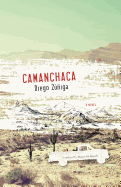
Chilean journalist Diego Zúñiga, winner of the Chilean National Book Award, has the enviable ability to use a minimalist, fragmented format and still articulate a depth of discomfort and sorrow that might ordinarily take hundreds more pages. In Camanchaca, Zúñiga shares the dysfunctional history of his unnamed narrator, a 20-year-old man-child, during a desert road trip with the father who abandoned him 16 years previously to start a new family in another town.
Left in semi-squalor with his clinging, unemployed mother, the young soccer fan practiced interviews for the sports radio show he dreamt of. One day his mother asked why he didn't interview her. "That was the start of the interviews. That was the start of the stories."
Camanchaca alternates between snippets of tales the narrator's mother told him while lying in their common bed at night and their impact on the present-day journey with his garrulous, oblivious father. The young man struggles with his habitual isolation, yearning to take off his headphones and confront the family's secrets.
Each page in this slim volume is mere paragraphs, sometimes sprinkled with lean dialogue, rarely approaching the bottom of the pages. Yet the tidy parcels pack jolts of emotion as Zúñiga discloses the foundation of the burdens the young narrator has carried through his life, every page another piece of the sad, damaged puzzle. As powerful as it is spare, Camanchaca is a raw trip through an emotional wasteland. --Lauren O'Brien of Malcolm Avenue Review