

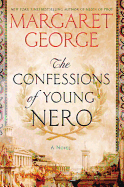
Margaret George's specialty is biographical novels (like Helen of Troy), in which she takes legendary historical figures and unearths the human being buried beneath centuries of myth and propaganda. The Confessions of Young Nero represents one of her most ambitious rehabilitations to date: the first of two novels dedicated to the brief but eventful life of the titular Roman emperor Nero.
The novel opens with Caligula throwing a very young Lucius Domitius Ahenobarbus, later Nero, in the water to drown, an early introduction to the dangers of absolute power. Growing up in exile, Lucius might never have become Nero were it not for the murder of Caligula and his family, along with the ruthless machinations of his mother, Agrippina. Seen through young Nero's eyes, Agrippina's brutal ways inspire mixed emotions from her son, as well as harsh lessons: "Let them call me cruel. Better that than dead."
However much Nero might wish to live a simple life as a poet or a musician, his hopes are frustrated by Agrippina's ambitions. His priorities are forced to shift drastically as he's simultaneously imbued with enormous power and increasingly threatened by Agrippina's attempts to usurp his authority.
The Confessions of Young Nero asks what responsibilities a leader has to his people, especially if the demands of leadership interfere with personal happiness. In retrospect, Nero's major folly seems to be in thinking of himself as a person, rather than the living embodiment of the state.
George's novel may not prove to be the definitive historical interpretation of Nero, but her thoughtful, humane treatment of the man will inspire readers to question his status in the popular imagination as a depraved pleasure-seeker. --Hank Stephenson, bookseller, Flyleaf Books, Chapel Hill, N.C.