

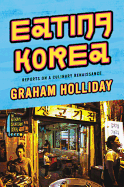
Graham Holliday (Eating Viêt Nam) fell in love with Korean food during the two years in the mid-1990s that he spent as an English teacher in South Korea. In Eating Korea, he details his return 20 years later. Crisscrossing the country, he searches for the dishes that make its food distinctively and quintessentially Korean. What he finds, however, is an altered culinary landscape, gentrified and modernized in response to inevitable global influences.
What used to be considered a mainstay in the diet (kimchi) has largely fallen out of favor with the country's youth because of its fermented smell. Noting the increased availability of cheap food, Koreans' obsession with upward mobility and diminished interest in home cooking, Holliday travels to the farthest reaches to pry secrets from grand masters who uphold culinary traditions. In particular, he is determined to find dak galbi, the mixed chicken dish he ate for much of his initial stay in Korea: "a mess, a mistake that works... where everything Korean that's edible got dumped inside, turned upside down, rattled about, and thrown in your face."
No matter how many people Holliday asks, though, no one can define Korean cuisine to his satisfaction. He is left to rue--through nostalgia and sharp but witty critiques of modern Korean lifestyles--the loss of "the Korean food I had known that was born out of poverty and postwar solutions." Grudgingly, entertainingly, he persists, mulling over the implications of South Korea's culinary rebirth. --Nancy Powell, freelance writer and technical consultant