

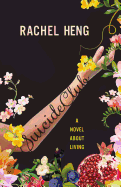
Set in a near-future New York, Suicide Club hinges on the premise of immortality. Healthcare and technology have already extended the potential human lifespan to hundreds of years, and "lifers" such as Lea Kirino do everything in their power to optimize that lifespan: avoid meat and sugar in favor of chemically engineered and nutritionally balanced meals; abstain from any high-impact exercises, such as hiking or running; listen only to music known not to tweak cortisol levels. The push for immortality goes beyond the individual level, however, as government edicts declaring the "sanctity of life" outlaw any and all attempts to die outside of a death date assigned to individuals at birth.
Lea's life is a long one, full of sacrifices made willingly but without thought. When her estranged and possibly suicidal father shows up after 88 years, however, she begins to reflect on those costs, opening a series of questions about her life--and possible death--that she is unable to answer.
Rachel Heng's debut novel is steeped in death; the titular Suicide Club uses very public suicides to make a point about what it means to choose how one lives by choosing how one dies. Despite a sense of dread that pervades its pages, Suicide Club never veers into morbidity or hopelessness. Indeed, it is a celebration of "the messy, sprawling innards of life, the flesh beneath the skin, the breakages," a reminder of what it means really to live--on one's own terms, with abandon. --Kerry McHugh, blogger at Entomology of a Bookworm