

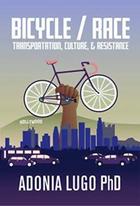
Adonia Lugo experienced racism and class segregation firsthand as a mixed-race child of a single mother living on the wrong side of the tracks in San Juan Capistrano, Calif. Without ready access to cars, they rode bicycles to school and work. Lugo's love for cycling grew as a college student in bike-friendly Portland, Ore., and she brought this enthusiasm back to Southern California. But bike culture in a land where "he who can travel fastest wins" was unwelcome. When Jose Umberto Barranco, a Latino man biking home from work, was killed by an intoxicated driver on October 2007, Lugo found her calling as an activist for the underrepresented voices in bike culture.
Lugo delves into the roots of Southern California car culture, describing how this status symbol supplanted other modes of transportation. Her grassroots activism in Los Angeles fought "the legacy of colonial racism in my native land," and unearthed the greater role class, race and human infrastructure play in transportation policies. "Crossing boundaries is normal for us," she writes about cyclists of mixed race, "but others see our shape shifting as a threat. We feel the sting of poison and are called enemies by people who never have to look in the mirror and see their own faces twisted with hate." To that end, in the hard-knock politics of Washington, D.C., her advocacy for equitable cycling policies has faced disinterest from power brokers.
Bicycle / Race is a well-written and insightful book about a young adult finding her voice in a world that favors the status quo. --Nancy Powell, freelance writer and technical consultant