

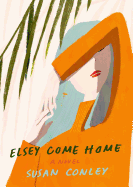
The eponymous narrator of Susan Conley's novel Elsey Come Home is a woman caught between choices: to drink or not to drink; to dwell on her past or look toward her future; to stay in her marriage or to leave it. The central tension of Elsey's life, however, is the impossible choice between being an artist and being a mother.
Elsey is an American woman living in Beijing with her husband, Lukas, and their two young daughters. Once a successful painter, Elsey now has a life quietly dominated by her drinking problem, her unresolved grief over the childhood loss of her younger sister and her avoidance of Lukas's attempts to fix their marriage. Unable to paint or to mother consistently, she feels a terrible "unrest" in her life, especially when comparing herself to others in her community of affluent expats.
Conley organizes the novel around her character's time at a weeklong mountain retreat with an unlikely group of strangers, and readers are meant to understand that this is the experience that will, in a roundabout way, lead to Elsey's salvation (just as Elsey herself hopes it will). But the story is most interesting when it strays beyond this plot: when Elsey reflects on her childhood in Maine; her lush descriptions of what it was like to be fully immersed in her artwork, and then in her drinking; the end of the novel, after the retreat, when Elsey impulsively takes her daughters to the U.S. Her thoughtful, vulnerable, honest articulation of her pain--told from a distant future vantage point--is what truly drives her story toward resolution. --Hannah Calkins, writer and editor in Washington, D.C.