

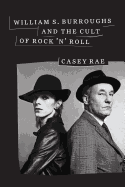
History may remember postmodernist writer and raconteur William S. Burroughs as many things: a genius, a visionary, the man next to Marilyn Monroe on the Beatles' Sgt. Pepper's Lonely Hearts Club Band cover, a killer--but history will undoubtedly remember him. In William S. Burroughs and the Cult of Rock 'n' Roll, director of music licensing for SiriusXM, course developer for Berklee Online and longtime music critic Casey Rae explores the cultural tempest that was Burroughs, via his impact on popular music.
Rae sketches him thusly: "Here was a homosexual drug addict, born in the Gilded Age, who killed his wife in a drunken game of William Tell and wrote infamous prose featuring orgasmic executions, shape-shifting aliens, and all manner of addicts, sadists, and creepy crawlies." Burroughs rocketed into the public eye with the publication, and almost immediate banning, of Naked Lunch in 1959. Soon, the man and his methods--in particular, his "cut-ups," wherein words were literally cut up and rearranged--became embedded in the institution of rock music and its various offshoots: heavy metal, punk, new wave.
Burroughs remained mostly behind the scenes as scads of musicians sought his advice or drugs or both. Scads more simply worshipped his ideas, imbuing their work with them. Notable fans included David Bowie, Bob Dylan, Iggy Pop, Kurt Cobain and Patti Smith.
Rae offers thoughtful, generous analysis. As Burroughs's own cut-ups might, Rae renders a portrait of Burroughs's influence akin to a reflection in a disco ball: fragmented, refracted, multiple and beautiful. --Katie Weed, freelance writer and reviewer