

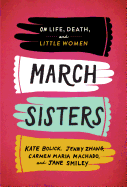
Inspiring generations of women and authors, Louisa May Alcott's Little Women can be argued to exhibit an influence and staying power few contemporary novels have. For the 150th anniversary, four prestigious authors explore their connections to the four March sisters.
Like groomed Meg at the Moffats' ball, Kate Bolick (Spinster) has experienced the anxiety of fitting in and the concept of "frock consciousness," which she calls "a curious feedback loop of self-perception." Jenny Zhang (Sour Heart) empathizes with fan-favorite Jo, whose temper bucks the traditional feminine stereotype: "To be a woman is to know anger. To be underestimated, treated as inferior, have one's concerns classified as minor... how could one not feel angry?" Carmen Maria Machado (Her Body and Other Parties) argues that Beth's frailty (and eventual death) acts not only as a plot point but also dictates her quiet, sweet demeanor, eliminating the possibility of personal ambition. As one who also endured childhood illness, Machado focuses on personal independence and asks, "How do you stay out of other people's stories?" Jane Smiley (Golden Age) offers a fresh perspective on Amy, suggesting that instead of the spoiled and vain baby sister, she is the most self-realized and modern of the four women, "the thoughtful feminist... more like what we aim to be today."
Heavily autobiographical, Alcott's novel "lured readers not with fantastical adventures and talking animals, but with a realism that was radical in its forthrightness, giving voice to female adolescence." As much an exploration of what it means to be a woman in our modern world as it is an homage to Alcott's classic, March Sisters packs a thoughtful, empowering punch. --Jennifer Oleinik, freelance writer and editor