

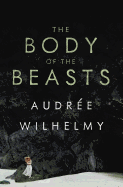
The Body of the Beasts, Québécois author Audrée Wilhelmy's third novel but first translated into English, explores the animalistic side of human nature and female sexuality. Mie, who lives with her mother and siblings near a remote fishing village, has the ability to cast her consciousness into the minds of wildlife. In this way, she explores her sublime but brutal homeland through the eyes of other creatures. But at the age of 12, Mie becomes curious about her own, human form and is determined to learn about it through sex with her older uncle, and her mother's lover, Osip. As she pursues her goal, Mie learns more about her mysterious and distant mother, Noé, the desire that drew Osip and his brother to Noé in the first place and her own body that was formed as a consequence of that desire.
With its childlike perspective, lyrical prose, ruggedly beautiful landscapes and sense of foreboding, The Body of the Beasts is first and foremost a dark fairy tale. The novel's centerpiece scene--in which Noé tells the story of a trapped Queen while brutally skinning a whale--brings this style together with the novel's larger themes of violence, sexuality and animalism. The fierce sensuality and visceral descriptions prove haunting--in the cases of Mie's longings, the wilderness's violence and the ruthlessness of male desire--but also awe-inspiring. In Wilhelmy's practiced, poetic hand, the flight of a heron and the panic of a crab are brought joyously to life. Nevertheless, the heart of the novel remains with Mie, whose competing curiosity and anxiety vie for the reader's attention until the final page. --Alice Martin, freelance writer and editor