

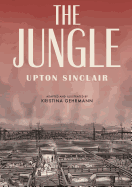
Despite the gruesome images depicting the workings of Chicago slaughterhouses and meatpacking factories in the late 19th century and into the early 20th century, Kristina Gehrmann's graphic adaptation is a surprisingly gentler, kinder read than Upton Sinclair's 1906 novel. Credited with inciting the public outcry that resulted in both the Federal Meat Inspection Act and the Pure Food and Drug Act, The Jungle significantly influenced how and what Americans eat today. In this adaptation--smoothly translated from Gehrmann's German by Ivanka Hahnenberger--the human and animal suffering remain undeniable, the working conditions utterly unacceptable, the living situations horrifically bleak. The original unrelenting brutality, however, seems relatively contained, and the body count is similarly lessened; that said, reading this latest edition remains a chilling experience.
In summer 1899, a multi-generational family arrives at Ellis Island from Lithuania, carrying the hope that dedicated hard work is all they need to find solid footing in the new world. A young couple, Jurgis Rudkus and his fiancée, Ona Lukoszaite, bind the group together, accompanied by various parents, an uncle, cousin and younger siblings. The clan settles in Chicago, where a friend from the old country who runs a delicatessen welcomes and feeds them, then points them to a run-down boarding house where they will initially live. Finding employment proves challenging, but not impossible; the high-risk, grueling work, however, exacts a steep, even fatal, price.
Drawn in stark black and white with the occasional addition of red ink, Gehrmann's art is a spectacular, albeit disturbing, portal into Sinclair's history-making, policy-changing achievement. --Terry Hong, Smithsonian BookDragon