

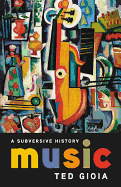
Musical innovation almost always comes from outcasts, Ted Gioia argues in his sweeping, persuasive Music: A Subversive History. Again and again, over the course of millennia, Gioia finds outsiders (enslaved people, shamans, women, bohemians) upsetting the powers that be with breakthroughs in technique, expression, instrumentation and frank passion. And, repeatedly, those powers, after years of resistance, assimilate the outsiders' once-verboten music to shore up their own hegemony. It's a reliable, perennial process that inspires Gioia, a shrewd and restless guide, to link the biblical adoption of the lusty Song of Songs to Richard Nixon's goofy White House meeting with Elvis Presley.
A music historian and the author of, among other titles, Love Songs and How to Listen to Jazz, Gioia here takes the longest of long views, investigating the music making of hunter-gatherer cultures and ancient fertility cults as energetically as he digs into Bach, Louis Armstrong and N.W.A. Gioia writes for a wide audience while still challenging orthodoxies and championing open minds and ears.
The narrative favors Western music but is rich with examples from around the globe. His idea of subversive extends beyond minor differences of politics or marketing categorization to encompass instead assaults upon the established order. In Gioia's history, 1980s parents' outrage at "satanic" rock music is a logical continuation of Pope Eutychius's third-century injunction against blasphemous "women's song and ring-dances." Gioia treats the pop explosion of the last century as the in-progress continuation of his cycles of cultural disruption and adoption rather than their historic endpoint. --Alan Scherstuhl, freelance writer and editor