

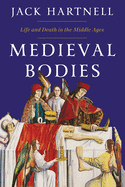
The medieval era, or the Middle Ages--the period between 300 and 1500--has been maligned as a "world of generalised misery and ignorance," where people lived "in piteous squalor only to make war in the fretful darkness." From the dawn of the Enlightenment to Game of Thrones, the medieval era has been portrayed as a primitive time when people knew precious little about the world, especially how their own bodies worked. But that's not true--not entirely.
In Medieval Bodies, art historian Jack Hartnell looks at the role the body played during a largely misunderstood era. People of the time believed that the relationship between the four classical elements (fire, water, air and earth) and the body's humors (blood, phlegm, yellow bile and black bile) kept the body in balance, and treatments such as bloodletting and trepanning (drilling a hole into the skull) were early procedures to cure the sick. Despite these misguided medical procedures, others, such as plastic surgery and skin grafts--which we consider marvels of modern medicine--were popular for survivors of both syphilis and the battlefield. While the physical workings of the heart were little understood, metaphysical views of the mysterious organ as "a symbol for expressing the very lowest lows and highest highs of religious and romantic life" persist to this day.
Through revealing works of art, Hartnell illustrates how physical knowledge and spiritual beliefs influenced medieval thinking about the body. And with witty poems about flatulence and naughty games like hot cockles, the Middle Ages were not all doom and gloom. Hartnell's tour of the medieval body shows that the era was much more complex than we give it credit for. --Frank Brasile, librarian