

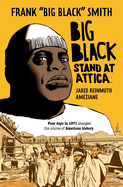
Big Black: Stand at Attica is an unflinching graphic memoir from Frank "Big Black" Smith, providing a firsthand account of the 1971 Attica State Prison uprising in New York. Big Black's nickname derives from his impressive physical stature, which, along with the respect he earned as the prison's football coach, inspired his position in charge of security among the rebelling prisoners. Big Black is clear about what the prisoners wanted--broadly speaking, improvements to the dehumanizing living conditions--but for a much more detailed breakdown of what led to the events at Attica, Heather Ann Thompson's Blood in the Water makes an ideal companion.
Big Black's distinctive contributions to the story of Attica lie in its focus on a single figure, Big Black, and in the illustrations. Améziane's art is capable of cinematic sweep--the opening panels show a helicopter ominously descending on the prisoners' makeshift camp--and of precise, almost documentary detail. The artwork portrays Big Black as a peacekeeper: he does his best to mediate between numerous factions among the prisoners and makes sure that the prison guards held hostage are treated humanely, despite how they treated the inmates.
Big Black positions the Attica uprising as part of a larger history of racist oppression. Only a few generations removed from slavery, the author finds himself working for insignificant wages at a prison that the warden runs "like his personal plantation." After the shocking state violence that ends the rebellion, the narrative turns to how Big Black survives the aftermath, placing his story in the context of a long struggle for human dignity. --Hank Stephenson, manuscript reader, the Sun magazine