

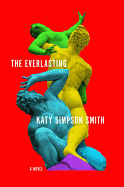
Katy Simpson Smith (Free Men) has accomplished a spectacular feat in harnessing the emotional thrust of a sweeping epic within the space of the average novel. The Everlasting spans two millennia with such strong assurance, the narrative never falters, even when it ascends to the eternal plane.
Four mere mortals navigate the uncertainties of their eras, all connected by the church of Saint Prisca in Rome. Tom is a modern biologist studying timeless protozoa in a nearby pond as he wrestles with a recent M.S. diagnosis. In the 16th century, Giulia is a powerful Medici, courted for her wealth as a potential patron for the monastery there, although her African heritage remains secret. Felix is the ambivalent crypt keeper for the site's ninth-century monks, desperate to maintain their relevance in the age of miraculous relics. Their faith is forever entwined with that of young Prisca in 165 AD, a Christian martyr who once pulled an eel from the pond with a fishhook.
Their arcs are embellished by the interjections of one who peers through time, sympathetically witnessing their predicaments. Smith lends Satan a marvelously epicurean voice. "I'd eat you with my eyes until your flesh was a pile of crumbs. God didn't make the body.... Take my hand, and let me show you the pieces I shaped."
The Everlasting crescendos magnificently, like Rome itself, erecting holy monuments upon earlier and earlier iterations, "until the city climbs so high," Satan observes, "God will have to ask Himself: Is this a shrine to me, or another Babel?" This novel is a wonder, building sensual prose toward a stirring inevitability. --Dave Wheeler, associate editor, Shelf Awareness