

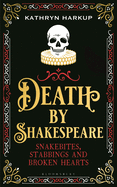
William Shakespeare took simple ideas and wove them, with rich detail, into poetry and prose that astoundingly still resonates centuries later. Throughout much of his work, he layered in empathy and understanding about life and death. During the 16th and 17th centuries, the grim reality of death was pervasive. Commonplace in the era were widespread illness, contagious disease and plagues; starvation and violent excesses; murder and suicide; venereal diseases and deaths from childbirth; witchcraft; war and public executions. These facts drew chemist and author Kathryn Harkup (A Is for Arsenic) to explore facets of death in the Bard's dramatic works and to examine death through the prism of analytical science.
Did Shakespeare capture the essence of death with accuracy? Harkup leaves no stone unturned in her immensely thorough and compelling distillation of the Bard's work, Death by Shakespeare. She starts with his humble beginnings in the 1500s and his rise to prominence, setting his ascendency amid the challenges of the time and the context of other playwrights of his era. From there, she cites specific works, examining the role of doctors, quacks and apothecaries in many of his plays, from Dr. Caius in The Merry Wives of Windsor to the female practitioner Helena who successfully treats the king of France after male physicians have failed in All's Well that Ends Well.
Harkup's expertise leans toward the scientific. Her riveting storytelling, however, is refreshingly accessible. Her narrative will attract and intrigue readers who appreciate the macabre, eager for the enriching wisdom offered by two masters in their fields. --Kathleen Gerard, blogger at Reading Between the Lines