

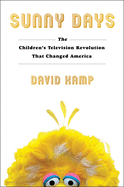
The scene was set: in the 1960s, it was recognized that young children of color weren't keeping up academically with their white peers, and studies were showing that the preschool years were more developmentally critical than educators had previously realized. Meanwhile, with the right enticement, toddlers were proving capable of seemingly effortless learning. As Children's Television Workshop (CTW) cofounder Joan Ganz Cooney puts it in David Kamp's enchanting Sunny Days: The Children's Television Revolution that Changed America, "Every child in America was singing beer commercials. Now, where had they learned beer commercials?"
In galloped Cooney and her team of visionaries to harness the power of television to address the learning gap between inner-city children and their white counterparts. Having secured both corporate and government funding and the services of a brilliant young puppeteer named Jim Henson, the CTW created Sesame Street. Not only was it an out-of-the-gate hit that featured television's first truly multicultural cast, but research suggested that kids who watched the show were indeed learning their ABCs and 123s. Other programs, segments and specials seeking to teach children academic basics and self-esteem-building skills followed, on public and commercial television, with the CTW's imprimatur and without it.
For readers of a certain generation, Kamp's (The United States of Arugula) book will offer a thrilling flashback effect, and the book's archival photos only enhance the time-tripping experience. For millennial readers, Sunny Days will be both a captivating glimpse at a revolutionary time and a blueprint for what's possible with a little seed money, civic-mindedness, feathers and glue. --Nell Beram, author and freelance writer