

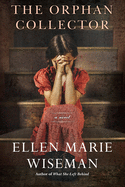
When Ellen Marie Wiseman wrote The Orphan Collector, little did she know that a story set during the 1918 pandemic would drop in the middle of another. "No children played in the alley below, no women hurried out to run errands, no men whistled or smoked on their way home from work." It's September 1918, and deadly flu is sweeping the globe. In Philadelphia people are instructed to stay inside, wear masks and practice good hygiene--not easy in a crowded city with areas of crushing poverty. Thirteen-year-old Pia lives with her mother and infant twin brothers and they, like other immigrants, are mistrusted for their unfamiliar ways. Bernice, Pia's neighbor, scorns the German "newcomers" to the United States, because "They weren't like her and her family, whose relatives had lived in South Philly since the 1830s.... She wouldn't have been surprised to learn the flu started with them."
After her mother succumbs to the flu, Pia cares for her brothers until a well-meaning but catastrophic decision to leave them to look for food leads to their abduction by Bernice. Pia is sent to an orphanage and spends the next several years looking for her brothers. "Almost everyone had been touched by the flu," she thinks. "But... at least they knew what happened to them." Bernice's xenophobia becomes justification for her shocking behavior, with terrible repercussions for untold numbers of children. Wiseman (The Plum Tree) shows how humans are capable of great cruelty but also great compassion in this ultimately uplifting, compelling read. --Cindy Pauldine, bookseller, the river's end bookstore, Oswego, N.Y.