

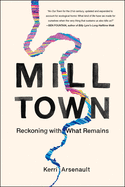
The tiny town of Mexico, Maine, is one only a native could love. But for all the affection she expresses for her roots there, critic Kerri Arsenault writes anything but a love letter in Mill Town: Reckoning with What Remains. Instead, in an imposing work of narrative nonfiction that blends memoir with ecological exposé and socioeconomic analysis, she painstakingly, and often painfully, lays bare the tragedy that has stalked the town's hardworking and plucky, but ultimately exploited, citizens.
At the heart of Arsenault's story--the product of more than a decade of investigation--is the paper mill located across the Androscoggin River from Mexico, in the larger town of Rumford. Opened in 1902 and specializing in the production of coated paper for glossy magazines, the plant provided employment to three generations of Arsenault's family, descended from the proud Acadians, French Catholics who migrated to the area from the Canadian Maritime provinces in the 18th century.
But as Arsenault reveals, the foul odor that persistently blanketed the town was an ill wind. That smell, along with the massive amounts of toxics dumped into the river, triggered concerns about an alarming number of cancer cases that earned the region the unwanted title of "Cancer Valley." One of those victims was Arsenault's father, who died in 2014 after working in the paper mill for 45 years.
Mexico's melancholy story--one that's mirrored today in thousands of struggling small towns across the U.S.--comes to life in Arsenault's sympathetic, but unfailingly clear-eyed, telling. --Harvey Freedenberg, freelance reviewer