

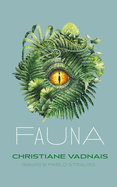
"All the disturbances of the planet seemed to be made flesh in her," Québécoise debut novelist Christiane Vadnais writes in Fauna, a superbly unsettling eco-apocalypse that finds climate change altering not just the world but the very idea of humanity itself. In 10 short, tense, interconnected stories set in snowed-in labs and floating lake villages, Vadnais examines humans' unraveling, from outside and within, in the years after extreme weather remakes their biomes.
Vadnais's approach to genre is amphibious, much like her conception of the relationship between people and the natural world: the literary and the horrifying slosh together here, just as the lake people of her future Canada become increasingly pale and viscous. She creates extreme situations in which doom threatens in the skies above and lurks beneath characters' skin. Two strangers wait out a weather apocalypse at a remote spa; a pregnant scientist studying a new parasite starts experiencing contractions in a snowed-in laboratory. Her prose, translated from the French by Pablo Strauss, can be terse when describing action but flowers into scarifying ickiness, equal parts clinical and poetic, when she links the pulsing mess of bodies to a natural world thrown out of balance.
The horror here doesn't concern monsters or villains, although one scene finds a woman pursued across tundra by a starving bear. Instead, Vadnais stirs terror at the possibilities of what we could become, what humanity might evolve or mutate into. Scariest of all: the sense that our potential extinction is something of a corrective. --Alan Scherstuhl, freelance writer and editor