

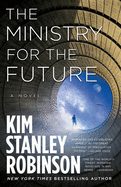
Score a point for the audacity of hope. The sprawling, multi-voiced The Ministry for the Future, Kim Stanley Robinson's third major fictional work centered on climate change, imagines the work it would take to retrofit this world--and its governments and economies--to face the looming interlocked catastrophes of climate change. Robinson opens with visceral eco-horror, offering a firsthand account of mass death in a mid-2020s Indian heat wave; the suffering of the Earth's most vulnerable is the novel's ever-present given. What's remarkable, then, is this call-for-action's pained optimism.
Robinson doesn't naively presume the best of people or of the entrenched interests that resist change to carbon-burning ways. The technocrats and scientists of the Ministry for the Future find that fighting against those interests remains impossible--instead, to save the planet, the Ministry must first change the incentives of its economy, making it more profitable for nations and fossil fuel interests not to extract and ignite oil. (One of his many narrators notes, cheekily, that it's economics that should be called "speculative fiction.")
International in scope and fully engaged with political realities, The Ministry for the Future follows up Robinson's Bush-era trilogy, collected as Green Earth, about rising seas swamping Washington, D.C., and 2017's epochal New York 2140, a chipper postapocalyptic marvel in which the residents of a sunken Manhattan usher in a sustainable future by ending capitalism. That kind of change can be harder to imagine than the colossal geo-engineering projects tested and touted by the Ministry. But Robinson digs deep into how, with institutional support and some off-the-books black ops, revolutionary ideas could still seize our world. --Alan Scherstuhl, freelance writer and editor