

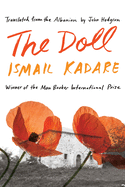
In The Doll: A Portrait of My Mother, translated by John Hodgson, internationally acclaimed novelist, poet and playwright Ismail Kadare offers a whimsical, autofictional account of growing up in Gjirokastra, an UNESCO World Heritage city in southern Albania. He pays affectionate yet emotionally conflicted tribute to his mother--whose fragile physicality, self-restraint and inscrutable mask-like face earn her the sobriquet "the doll"--and recognizes her early, essential influence on his career.
The author describes the Kadare ancestral home as "a menacing pile of stone," with a permanent air of frostiness and misunderstanding due to the ongoing cold war between its two mistresses: Kadare's sensitive, naive mother and his grim, tight-lipped grandmother. His rendering of local weddings as "a unique infiltration into the opposite camp, a parley of both intelligence and counter-intelligence" perfectly captures the union of families by marriage in traditional Albanian society, where the bride is expected to shift allegiance from her father's house to her new family of in-laws.
The Doll is a moving, intimate portrayal of a young man's literary awakening. Kadare (A Girl in Exile; Chronicle in Stone) shares with ironic detachment Albania's communist history and his resistance to its anti-individualist forces, resulting in a ban on his books and self-imposed exile in Paris. Throughout it all, his mother's sacrifice strikes most deeply for the Man Booker International Prize-winning author: she surrendered her own parental authority to liberate him, in a world where freedom was rare and hard to find, "like crusts of rationed bread in the time of the Germans." --Shahina Piyarali, reviewer