

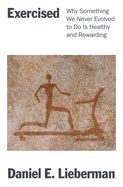
In this eye-opening analysis of physical activity, Daniel Lieberman, professor of human evolutionary biology at Harvard and a pioneering researcher on the evolution of human physical activity, reveals that people's reluctance to exercise is nearly as old as the dawn of modern humans.
Exercise was once considered backbreaking labor, or worse, punishment (consider Oscar Wilde, forced to climb a treadmill-like device for hours a day as a convict). Today, exercise is hailed as the solution to much of what ails us. It has been medicalized, commercialized and industrialized, yet many people are reluctant to participate. Lieberman applies an anthropological lens to explain why: we evolved to be as inactive as possible and maintain our limited energy resources for reproduction. Over time, humans traded size and strength for bigger brains and learned to fight with weapons rather than engage physically. Today, people drive rather than walk, take elevators instead of climbing stairs and push shopping carts instead of carrying items. Despite being "inherently unnecessary," exercise is required to interrupt long periods of inactivity that contribute to modern maladies like obesity and diabetes.
While everyone fundamentally knows exercise is good for them, Lieberman wisely chooses to dispel myths that dissuade people from physical activity. He explains, too, that sitting is not inherently bad for us; you can lose weight by walking; there is no "optimal" prescription for exercise. By discussing the importance of dance throughout human history--not just as a physical activity, but a spiritual one--Lieberman's argument that engaging in meaningful activities that happen to have health benefits provides a blueprint for successfully integrating exercise into one's life. --Frank Brasile, librarian