

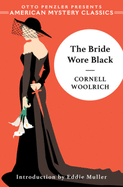
With the 1940 publication of The Bride Wore Black, Cornell Woolrich became one of the founding fathers of noir mysteries and psychological suspense tales. Bride is Woolrich's seventh novel, but it is the first in which he found his intoxicating bleak and nihilistic voice. This riveting, moody and terse novel is an exciting mix of pulpy crime fiction and eloquent, masterful prose, and it earned him the moniker "the Poe of the 20th Century."
The Bride Wore Black is a real trendsetter for hardboiled mysteries. Woolrich keeps readers in suspense by withholding information. Rather than putting his murderous femme fatale, Julie Killeen, front and center, Woolrich presents the story from the points of view of her male victims. Readers are continually introduced to men who don't seem to deserve to be murdered. There's added suspense when the men are often circled by several women, and readers don't know which one is Julie or when she will strike. Another noir novelty is the introduction of Detective Lew Wagner, who's trying to figure out the killer's identity and the reasons behind her murderous actions. Most mysteries would put the detective center stage, but Woolrich also places Wagner at a distance to keep readers off-balance and apprehensive. The twist ending is a double sucker-punch when Woolrich reveals something about the victims and Julie. (It also differs from Francois Truffaut's 1967 film adaptation.)
Woolrich's The Bride Wore Black still packs a wallop with its smoky atmosphere, fascinating characters and clever telling. --Kevin Howell, independent reviewer and marketing consultant