

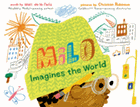
Matt de la Peña and Christian Robinson's Milo Imagines the World, like their justifiably celebrated Last Stop on Market Street, centers on a child's regular ride on public transportation to a destination initially unknown to readers. But while Market Street's CJ asks why they're going where they're going, Milo Imagines the World's young protagonist is resigned to his circumstance and the accompanying agitation: "These monthly Sunday subway rides are never-ending, and as usual, Milo is a shook-up soda."
To pass the time, Milo people-watches, using a notebook to record the places he imagines his fellow passengers going after they reach their stops. For a boy wearing a suit and tie, Milo imagines "the clop clop clop of the horse-drawn carriage that will carry him to his castle." For a trio of break-dancers who cavort in Milo's train car and who, like him, aren't white, he glumly foresees that "even after the performances are over, faces still follow their every move." Robinson is back with his robust paint-and-collage art. Chunky geometric shapes stand out with brazen brightness against various train stations' determinedly industrial color schemes. To conjure what Milo puts in his notebook, Robinson switches to blunt strokes that look as though they were forged with crayons.
The occasion for the trip, it turns out, is Milo's monthly visit to see his incarcerated mother. On the subway, Milo feels "excitement stacked on top of worry on top of confusion on top of love"; readers of Milo Imagines the World will feel compassion stacked on top of heartache on top of humility on top of hope. --Nell Beram, freelance writer and YA author