

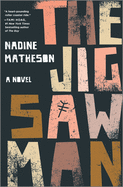
At the start of Nadine Matheson's sinister The Jigsaw Man, Detective Inspector Anjelica Henley returns to field duty with London's Serial Crimes Unit only to be greeted by pieces of two dismembered bodies. The methodology reminds Henley of the serial killer Peter Olivier, infamous for jigsawing his victims and scattering the segments around London. The latest body parts are carved with Olivier's signature, a symbol whose existence the cops have never publicly revealed.
The problem is, Olivier has been serving a life sentence inside a high-security prison and Henley put him there herself two years earlier. The only logical conclusion is that Henley and the SCU have a copycat killer on their hands. Henley must face Olivier again to ask for help, but he has other plans.
The Jigsaw Man is not for the faint of heart or weak of stomach; it depicts gruesome scenes of murder and torture, sometimes from the victims' point of view. But this is countered by the humane portraits of the detectives. Henley isn't just an inspector; she's also a wife and mother with a young daughter and struggling with the work-life balance while trying to keep her family safe from murderous psychopaths. There's also the fact Henley is a Black woman leading a team of detectives, her trainee is a man named Salim Ramouter and the head forensic pathologist is a woman named Linh Choi. Matheson doesn't make a big deal out of her diverse cast of characters. She's simply normalizing inclusion and reflecting what the real world looks like. --Elyse Dinh-McCrillis, blogger at Pop Culture Nerd