

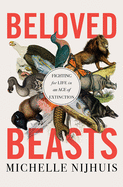
Michelle Nijhuis, an award-winning writer and a project editor at the Atlantic, pens a lively, impeccably researched history of the conservation movement in Beloved Beasts, peopled with memorable characters.
Its roots began with wealthy hunters who wished to preserve their game, and Nijhuis does not shy away from the shadow that elitism and racism cast over the cause: "The story of modern species conservation is full of people who did the wrong things for the right reasons, and the right things for the wrong reasons." Taxidermy and then zoos were the early means by which conservationists elicited compassion for endangered animals. William Hornaday went from chief taxidermist in 1888, at what would become the Smithsonian National Museum of Natural History, to director of a "new zoological park," later the Bronx Zoo--eight years later. The evolution of Hornaday's attitudes, alongside the changes within the conservation movement itself, is thrown into high relief through his unlikely friendship with Rosalie Edge, who challenged the National Association of Audubon Societies for allegedly "serving sportsmen better than birds." Meanwhile, Charles Darwin's ideas on the "survival of the fittest" became twisted by Francis Galton (his cousin!) into eugenics.
Some names are instantly recognizable, such as Rachel Carson and Carl Linnaeus; others are forgotten but their work lives on, such as Linnaeus's friend Peter Artedi, who contributed meticulous work categorizing fish. Nijhuis nimbly and thoughtfully demonstrates how--to this day--politics and science, presidents and conservationists twine together in the ebb and flow of the sharing of resources between human and nonhuman beings. --Jennifer M. Brown, senior editor, Shelf Awareness