

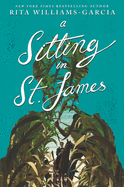
The masterful Rita Williams-Garcia (One Crazy Summer; Clayton Byrd Goes Underground) depicts the brutality and inhumanity of slavery in the antebellum South by intertwining the lives of the white Guilbert family and the Black people they enslaved in this shocking and dramatic novel.
In 1860s St. James, La., Madame Sylvie prepares to sit for a portrait with a well-known artist. As Madame gets ready to partake in this even-for-her-time mostly antiquated tradition, she nags her family into getting their affairs in order. Madame's son, Lucien, scrambles to make a profitable marriage for his "quadroon" daughter, Rosalie (who, as the product of the rape of a Black woman, Madame refuses to acknowledge), to bring honor and financial stability to the family's failing plantation. Lucien's son, Byron, a West Point cadet, agrees to marriage with a young lady from a prominent family even though "he didn't share his father's or grandfather's lust for Black women, or for women of any color, for that matter"; Byron hides from his future wife, father and grandmother that he is in love with a charming fellow cadet, Robinson.
With an extensive cast of characters, Williams-Garcia uses history to create the drama, constantly exposing how white slave owners depended completely on those they enslaved: Thisbe, Madame's personal servant (whom Madame named after a beloved dog), is in charge of getting "Madame on and off the chamber pot and wip[ing] her behind." Mature content and themes are treated with nuance and subtlety, but Williams-Garcia makes the cruelty clear: there is abuse, rape and child murder. Williams-Garcia's extensive research to create this work of historical fiction brings the U.S.'s sordid past into the present; in this traumatic and heartbreaking novel, she uncovers the vicious, disturbing realities enslaved people faced. --Kharissa Kenner, children's librarian, Bank Street School for Children