

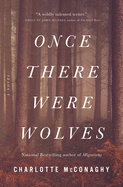
Speaking to Shelf Awareness in 2020, Charlotte McConaghy said of her debut novel, Migrations, "It's about trying to defy the sense of personal hopelessness... and the pervasive fear that we are powerless" to stem the climate crisis. In McConaghy's beautiful and brutal follow-up, Once There Were Wolves, this tension between hope and despair again permeates a story of a woman fighting to repair ecological as well as personal devastation.
As girls, twins Inti and Aggie Flynn learned of nature's power to mend the human spirit. Their father preached that "the world turned wrong when we started separating ourselves from the wild," but that "we might survive this mistake if we found a way to rewild ourselves." Their mother taught another lesson: that the brokenness and cruelty inside people cannot be fixed, only guarded against. Now an adult, Inti travels to Scotland (with Aggie in tow), where she leads a team of biologists attempting to rehabilitate an area of Highland forest through the reintroduction of wolves. With the project facing fierce, even violent resistance from a suspicious public, Inti must protect not only her wolves--with whom she shares an increasing and perhaps dangerous level of identification--but her sister as well.
McConaghy excels at conveying the sensuous experience of nature and the emotions it provokes: wonder at its majesty, sorrow at its destruction. Unflinching in its view of the harm humans inflict on the environment and on each other--and insisting on the interconnectedness of the two--Once There Were Wolves delivers a powerful call for hope in the face of catastrophe. --Theo Henderson, bookseller at Ravenna Third Place Books in Seattle, Wash.