

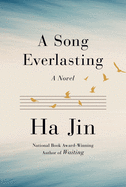
Powerlessness pervades Ha Jin's perceptive A Song Everlasting, as his protagonist leaves fame and familiarity in one country to flee toward ambiguity and adaptation in another. Freedom, Yao Tian reasons, is his driving motive. National Book Award-winner Jin (A Map of Betrayal), notable for empathically crafting lives from meticulously observed details, creates an antihero caught between China and the U.S.
Tian sings lead tenor in a Chinese company renowned nationally and abroad. His wife, Shuna, is a rising university history professor; their 13-year-old middle-grade daughter, Tingting, is about to apply for entry into a tony Beijing prep school. At 37, Tian's career seemed impressively satisfying, his and his family's lasting comfort all but guaranteed.
Following a scheduled company performance in New York City, Tian encounters an old Beijing friend. Yabin has emigrated to the U.S., and presents Tian with a lucrative singing engagement--this time solo, as part of a concert to celebrate Taiwan's (not China's) National Day. The generous fee, Tian realizes, would help offset Tingting's anticipated tuition increases. Tian's director isn't pleased, but he's not forbidden. And so Tian stays, performs and returns home. The disciplinary consequences are immediate. But when he's asked to surrender his passport, Tian uses all his connections to flee to New York, initially convinced that Shuna and Tingting will eventually join him. Expectations, however, are not reality.
Jin's narrative here isn't his strongest; Tian's meandering, passive acceptance grows cumbersome. For Jin's most devoted readers, however, his signature ability to engage and expand his characters through acute, forthright observations will not disappoint. Once again, Jin provides a meaningful everyman tale beyond borders and cultures. --Terry Hong, Smithsonian BookDragon