

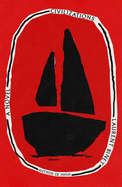
In Civilizations, the third novel from French novelist Laurent Binet (HHhH; The Seventh Function of Language), the author's delightful iconoclasm and trademark textual mischief make for a rollicking alternative history of the Age of Exploration.
The novel unfolds as a series of mock-historical documents, each building on the last to produce an uncannily inverted image of the early modern world. In the first, a band of Viking explorers travel from Greenland to Panama, seeding native cultures with their religion and technologies. The second, in the form of Christopher Columbus's personal diaries, sees the doomed explorer arriving in America to find its inhabitants armed with iron weapons and immune to European diseases. Binet clearly relishes the chance to inhabit the voice of a monumental text, be it the terse grandeur of the Norse sagas or the mounting desperation of Columbus as his grim destiny draws nearer. But these sections merely lay the groundwork for Binet's main event, a spectacular counterfactual epic in which the Incan leader Atahualpa sails to the New World--that is, Europe--and, exploiting that continent's political and religious volatility, handily conquers it.
As in his previous novels, Binet is fascinated with the ways by which written accounts influence our knowledge of the past. Compared to the staid certainty of history, "the truth of the present moment, albeit hotter, louder and--in all honesty--more alive, often comes to us in a more confused form than that of the past"; Civilizations, then, is a glorious attempt to breathe some of that hot, loud life back into settled notions of historical possibility. --Theo Henderson, bookseller at Ravenna Third Place Books in Seattle, Wash.