

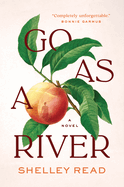
In Shelley Read's moving debut novel, Go as a River, narrator Victoria Nash recalls a hardscrabble childhood in Iola, Colo., and her struggle for a secure future that honors her past.
The book starts as a coming-of-age novel but quickly becomes a story of tragic loss and incredible strength. "In the endless stumble toward ourselves, we harvest the crop we are given," Victoria reflects. At 17, she is resigned to keeping house for the three men of the family, her responsibility for the five years since her mother's death, in addition to doing farm chores and helping in the peach orchard. A chance encounter awakens new feelings, and soon she is "a woman making choices and taking risks rather than an obedient and timid girl." In the social climate of a 1949 farm town, Victoria's choices foreshadow doom. She works to rebuild her life after an unfathomable loss brings a "sadness that transcends sadness"; she is inspired by, and deeply loyal to, the orchard her grandfather planted and the legendary Nash peaches it produces. By 1955, she's the last Nash in Iola, forced to evacuate when the government floods the region to create a dam. Victoria and the heirloom trees, "uprooted and against the odds," successfully transplant; years later, her heart finally finds peace.
Go as a River, framed by two wars (World War II and the Vietnam War), features a deeply sympathetic protagonist. Read writes lovingly and descriptively of her Colorado setting: its snow-capped peaks, deep pine forests, aspen groves, graceful deer, red-tailed hawks and the cold, rushing waters of the Gunnison River whose turbulence is claimed, poignantly, for the region's "progress." --Cheryl McKeon, Book House of Stuyvesant Plaza, Albany, N.Y.