

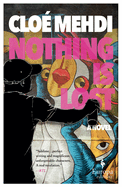
French author Cloé Mehdi makes an electrifying English-language debut with Nothing Is Lost, translated by the award-winning Howard Curtis. With all-too-familiar timing, Mehdi's disturbing novel highlights police violence, unpunished murder and community trauma.
Mehdi immediately drops readers into a maelstrom of past and present events that are all somehow linked to the "JUSTICE FOR SAÏD" graffiti popping up in a French town. Fifteen years ago, the same words and images protested the brutal murder of an innocent 15-year-old by a policeman who was later acquitted of all charges. Mattia, just 11, wasn't even alive when the tragedy happened, but the fatal consequences have determined his young life. The event caused his father's psychiatric hospitalization where he eventually hanged himself. Mattia, too, attempted suicide four years earlier, resulting in his mother's shocking surrender of him to young Zé, a former patient alongside Mattia's father. Mattia quips that his life might make a "good reality TV show" that he's titled The Daily Life of a Dysfunctional Family. He's not wrong: Zé's girlfriend just survived her own slashed wrists, Mattia's rarely seen mother is missing and his older siblings remain unreliable. With reminders of Saïd looming again on building walls, the police are convinced that Mattia's family--what's left of it--must know why.
Mehdi is an impressively intricate plotter, often presenting situations before expounding on pivotal details: why and how Mattia is Zé's ward seems especially suspect, but Mehdi's logic proves utterly convincing. Her gradual revelation of backgrounds, relationships and connections create quite an addictive thriller; her obvious awareness of socioeconomic and political climates enhances (and haunts) with a layer of sharp enlightenment. --Terry Hong, BookDragon