

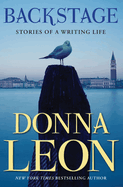
Donna Leon's inviting Backstage: Stories of a Writing Life pulls back the curtain for inquiring minds wanting to know what inspires, challenges, and sustains the creative output of the megawatt mystery writer of 34 (so far) Commissario Guido Brunetti novels (Give Unto Others; Trace Elements). It complements her breezy 2023 memoir, Wandering Through Life. Backstage is not, however, a how-to manual; rather, it comprises 32 brief, invigorating essays that highlight how Leon did it and why.
Leon's passionate Venn diagram trinity is opera, Venice, and other writers. Opera's "essential glories" of plot, motion, characterization, excess, and "the unknown" allow the imagination to "[serve] as a trampoline, hurling us ever higher in spirit at the thought of what is to come rather than at the sound of what is or has been." Baroque music melds naturally into Leon's adoration of La Serenissima (aka Venice) and her first Brunetti novel, Death at La Fenice (1992). Her time in that city is punctuated by a neighbor's blaring television, which triggers a nefarious plan involving toothpicks and a doorbell. She drops many writers' names, but her primary crime-genre influences are Ruth Rendell, Ross MacDonald, and Raymond Chandler.
The essays are sometimes light yet enlightening. In "Jack and Jill," Leon uses the nursery rhyme as a launching point for sexist, Marxist, and Freudian literary interpretations. This kind of explication, she says, is what provokes the "glimpse of common humanity" and is thus "the magic of fiction." When her fiction "demands careful research," Leon seeks out reliable sources, such as a quirky diamond dealer and a sex worker with squirrelly tales. --Robert Allen Papinchak, freelance book critic.