

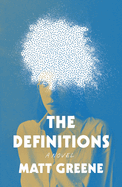
Matt Greene's The Definitions is a transfixing and economical dystopian novel, deftly using its scant pages to speak volumes about language and the construction of identity. The unnamed narrator recounts her experience at the Center, a facility designed to rehabilitate its occupants after a virus and a massive data breach that renders them unknown to themselves and to anyone else.
Though the residents of the Center are adults, they must relearn the most basic of concepts as they await the return of their memories and of their words. Their acquisition of language contributes to a developing sense of self, a process that should lead to graduation and their reintegration into life outside the Center.
The narrator seems to hold language itself as the goal, and through her voice, Greene assembles a dizzying collection of metaphors, each brilliant and revelatory: "Snow fell in asterisks, a million silent caveats." Despite steady growth, the residents don't seem any closer to recalling who they were, and some start to question the stories they've been told. Chino, a resident who has already tried and failed at the reeducation process once, develops multiple theories: there was no virus; there was a virus, but the Center was responsible for it; they are robots. Most, however, accept their fate without question, just as they accept the lessons they are taught--poems have to rhyme, there are two genders, dogs are mythical creatures.
The Definitions offers no tidy resolution; there is no act of discovery or resistance that reveals the truth of the Center. But the story is thoroughly satisfying, as controlled and complete as a perfectly crafted sentence. --Sara Beth West, freelance reviewer and librarian