

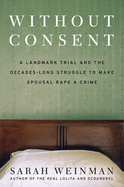
Sarah Weinman (The Real Lolita; Unspeakable Acts), an avatar of literary true-crime writing, doesn't do feel-good books. But with the riveting and righteous Without Consent: A Landmark Trial and the Decades-Long Struggle to Make Spousal Rape a Crime, she leaves readers with something unexpected: a glimmer of faith in the criminal justice system.
Without Consent begins with the story of Greta Rideout, who was raped by her husband, John, in front of the Oregon couple's two-year-old daughter in 1978. At the time, only three states besides Oregon--Iowa, Delaware, and Nebraska--had laws against spousal rape; generally speaking, the idea was that marriage, as Weinman puts it, "implied a state of perpetual consent." When Rideout became the first Oregonian to bring rape charges against her spouse, she couldn't have known that the case would spark a media circus, take on an international profile, inspire a made-for-TV movie, and, per Weinman, "lead to one of the most successful activism campaigns in America."
That campaign had some setbacks alongside its legislative victories, and Weinman manages to turn each account into a taut courtroom drama. Without Consent has its share of noble warriors, among them advocates for the victims, but the true heroes are the plaintiffs, two of whom consented to interviews with Weinman that she recaps heartbreakingly here. Thanks to these and other brave women, spousal rape was a crime "to varying degrees" in all 50 states by 1993, but it was not a federal crime as Without Consent went to press, Weinman reports. --Nell Beram, author and freelance writer