

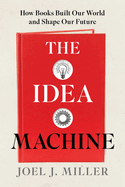
In The Idea Machine, Joel J. Miller celebrates the book as the quintessential information technology that shaped--and continues to shape--the world. Books, he suggests, "do for ideas what mosaics do for stones," and in this sweeping study, Miller identifies the distinctive circuitry of writing, ideas, and portability that books represent in spurring and forming thought across the millennia. From ancient Greek book culture to Roman poets, the Renaissance, and beyond, Miller highlights not only the importance of the book as a vessel of recorded thoughts but also as a tool for facilitating further idea generation: an "idea machine."
Underscoring his theme of writing as thinking, Miller provides examples from history; the scroll evolved to the codex and made the dissemination of knowledge and ideas--and the reactions to them--easier and faster. The codex form allowed authors to create "with a larger scope at a grander scale," Miller writes, and its contents lived beyond the author, thereby extending the reach of the author's ideas. He also praises monastic monks for their contributions: not only did they laboriously copy manuscripts by hand but they also improved the way books were written and read, introducing lexical technologies such as space between words, upper- and lowercase letters, chapter headings, paragraphs, and more. Miller includes a clunky "idea grid" to visualize the book's impact across time, but his chapter-ending "marginalia" vignettes are far more engaging. Overall, The Idea Machine is a diverting tour of bookish history that bibliophiles should gobble up. --Peggy Kurkowski, book reviewer and copywriter in Denver