

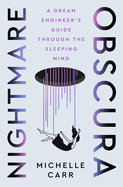
Whether professor and scientist Michelle Carr is discussing athletes who use lucid dreaming as a performance enhancer or sensory stimulation designed to influence dream content, her first book, Nightmare Obscura: A Dream Engineer's Guide Through the Sleeping Mind, offers a fascinating, easily digestible overview of why people dream and the wonders of dream science.
Carr describes nighttime dreamscapes as "fully immersive and self-relevant realms" where the mind sifts through a tangle of emotions and memories. Dreams help process lessons learned, soothe distress, and even serve as "overnight therapy." She agrees with researcher and lucid dream pioneer Stephen LaBerge, who says that "Dreams can't be fooled... because the dream is always wise to your inner feelings." One upside to bad dreams is that they allow people to process worries during sleep. It is a different matter, however, when the "bodily stress of nightmares" leads to disruptive sleep and impacts health. Carr explains how innovative sensory techniques such as "imagery rescripting"--where patients create a different version or rewrite the script of their nightmare--directly access the sleeping mind to dampen the negative emotions that can lead to nightmares.
Dreaming about a skill can improve one's performance. Lucid dreaming, a technique anyone can learn, is when the dreamer is aware that they are dreaming and can exert control over their dream content. For instance, Carr describes "a swimmer who does laps in a pool full of jelly (in his dream) to train his body to swim against greater resistance and slow down the flow of each stroke."
Packed with engrossing and actionable information about people's sleeping lives, Nightmare Obscura is sure to help readers "dream well tonight." --Shahina Piyarali