

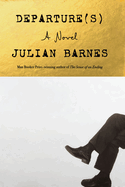
Fans of "agnostic/atheist" Julian Barnes (The Sense of an Ending; The Noise of Time) know that his major obsession is death, which he has written about in such works as the brilliantly titled memoir Nothing to Be Frightened Of. For Barnes, as he states in the intricately layered novel Departure(s), life "is a farce with a tragic ending, or, at best, a light comedy with a sad ending." This work, he says, "will definitely be my last book--my official departure, my final conversation with you." In it, a 77-year-old British writer named Julian Barnes has a form of blood cancer that "isn't curable, but it is manageable." Not surprisingly, he's thinking about departures, not just his inevitable demise but also friends and family who, through death or estrangement, are long gone. Two in particular are the subject of this work: university friends Stephen and Jean.
Events are rarely straightforward in Barnes's fiction, and that remains gloriously true here as he recounts their days as Oxford classmates in the 1960s, when he helped unite Stephen, "a scholarship boy of middle-class background," and "slightly posher" Jean. The couple soon broke up, and the trio lost touch. Forty years later, divorced Stephen contacts Barnes out of the blue and asks him to help reconnect him with Jean. The results are anything but smooth. As always with Barnes, references to French literature are plentiful, and the prose is enviably elegant, as when he writes that fiction "requires the slow composting of life before it becomes useable material." Literary nutrients abound in this generous work. --Michael Magras, freelance book reviewer