

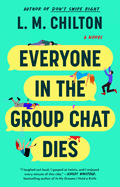
What's the most entertaining way to skewer clickbait culture? If you're L.M. Chilton (Don't Swipe Right), it's by writing a horror-inflected, mordantly funny thriller, namely Everyone in the Group Chat Dies.
As the novel opens, narrator Kirby Cornell, a journalist, receives a notification from an old group chat: "Esme" texts "miss me?" Missing Esme isn't unthinkable, given that she's been dead for 12 months. From here the novel springs back a year, when Kirby is living in "the arse-end of the English countryside" and reporting for the Crowhurst Gazette. The moribund town has a claim to fame: "Thirty years ago," notes Kirby, "Crowhurst was home to the UK's seventeenth-worst serial killer," who is believed to have died by suicide. And yet this put-to-rest story brings charismatic influencer Esme Goodwin to town: "I've come here to catch a serial killer," she informs Kirby.
Kirby's narration flits between her observations about Esme's investigation and, in the one-year-later present, her own detective work while whoever has Esme's phone proceeds to threaten everyone in the group chat. Although humor abounds--the chatter among Kirby and her roommates has the rat-a-tat of a prestige sitcom--Everyone in the Group Chat Dies has serious points to make, including about the importance of local media. (Kirby and the Crowhurst Gazette are up against a news organization that runs click-generating stories such as "22 Celebrities Who Don't Look Alike.") A few readers may anticipate the novel's big reveal, but they'll probably miss the clues with which Chilton sneakily seeds his paralleling creepy-crawly narratives. --Nell Beram, author and freelance writer
Set in the English countryside, this horror-inflected, mordantly funny thriller finds a journalist trying to figure out how a dead influencer appears to have revived an old group chat.